us-ss-death-index is a public database maintained by the United States Social Security Administration that lists over 94 million death records. Each entry includes a person’s full name, Social Security number, birth date, death date, and last known city or state of residence. This index helps people confirm vital facts, trace family trees, and find legal documents like wills. It only includes deaths reported to the SSA, so it does not cover everyone who has died in the U.S.

How the us-ss-death-index Works
The us-ss-death-index comes from the SSA’s Death Master File. Funeral homes, banks, and government agencies report deaths to the SSA. These reports go into the database. Most records start from 1962, but some go back to the 1930s. The SSA stopped sharing new public updates after 2014 due to privacy rules. Now, only certified users can get fresh data for fraud prevention or research.
Each record shows basic details: name, SSN, birth and death dates, and last residence. Researchers use this info to build family histories. They cross-check with census data, military files, and probate records. The index does not include cause of death. For that, users must contact the National Death Index or state health departments.
Top Online Portals for Searching the us-ss-death-index
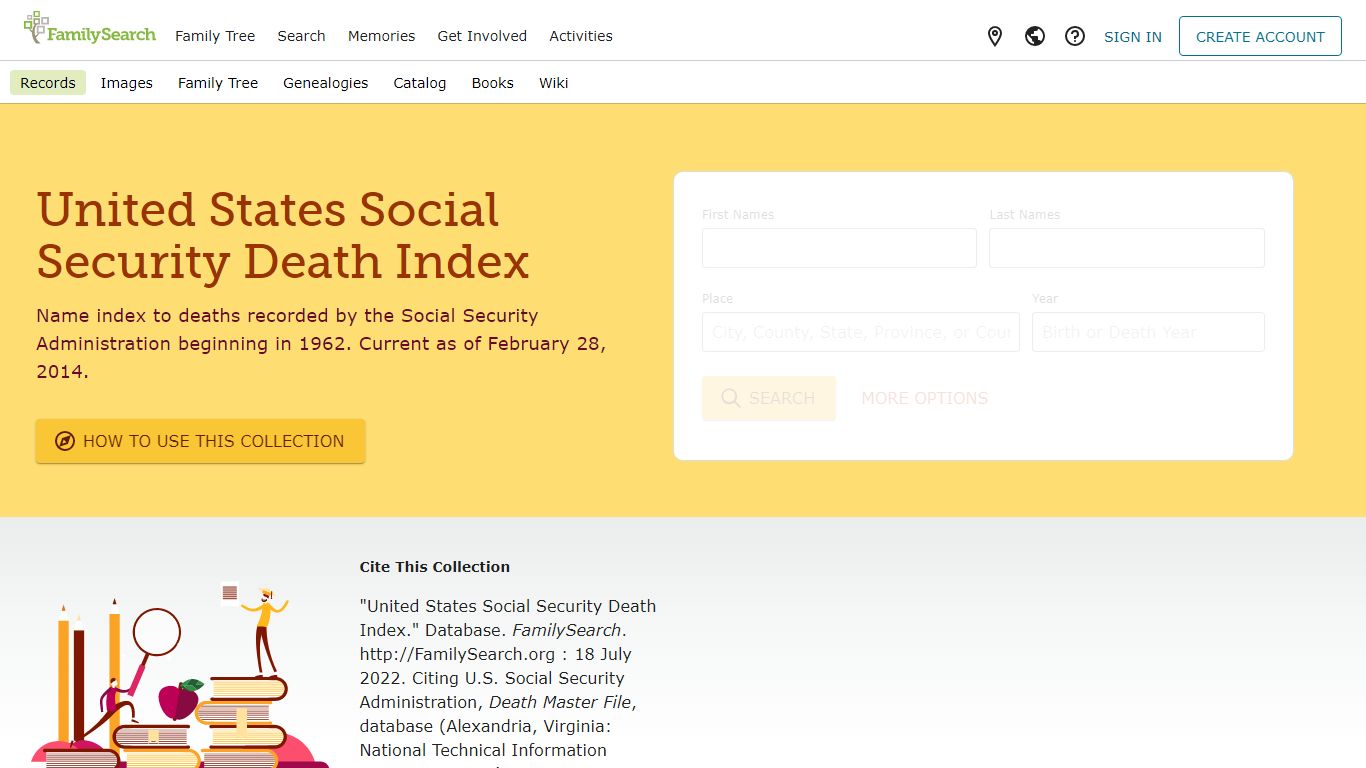
Several websites offer free or paid access to the us-ss-death-index. Each has unique features. FamilySearch provides over 80 million entries from 1962 to 2014. Users can filter by state, year, or exact name spelling. It links to marriage licenses and cemetery lists.
Ancestry.com hosts more than 94 million records from 1935 to 2014. It adds scanned death certificates, obituaries, and probate files. Its search tools let users combine name parts with dates or locations to reduce false matches.
ObitsArchive updates weekly with about 89 million records. It connects each entry to newspaper obituaries when available. GenealogyBank merges SSDI data with birth announcements, wedding notices, and military reports. Fold3 offers over 80 million profiles and lets users export results as CSV files.
State-by-State Search Options
Some platforms let users search the us-ss-death-index by state. Clicking on “Alabama” shows all decedents whose last known residence was in Alabama. Similar pages exist for Alaska, Arizona, Arkansas, California, Colorado, and every other state. This helps narrow results and speeds up research.
These portals display name, SSN, birth and death dates, and city of residence. They are useful for local genealogy projects or verifying family ties in specific regions.
Limitations and Accuracy of the us-ss-death-index
The us-ss-death-index is not complete. It only includes people with a Social Security number whose death was reported. Infants, undocumented immigrants, and those who died without reporting may be missing. Errors can occur if funeral homes submit wrong info.
After 2014, the SSA restricted public access. The Limited Access Death Master File requires certification for new data. Most free sites now rely on older archives. Always double-check findings with other sources like birth certificates or court records.
How Researchers Use the us-ss-death-index
Genealogists use the us-ss-death-index to confirm dates and places. They look for parents’ names, spouses, and children. The last residence helps locate wills or property deeds. Military researchers cross-reference with service records to find veterans.
Demographers study trends in mortality. Epidemiologists track disease patterns. But for cause of death, they use the National Death Index (NDI) run by the CDC. The NDI has over 100 million records and requires approval to access.
Free vs. Paid Access: What You Need to Know
Free sites like FamilySearch and ObitsArchive offer basic searches. Paid services like Ancestry.com provide extra documents and advanced filters. Some libraries give free access to paid databases with a library card.
Always check the date range. Many free indexes stop at 2014. If you need recent deaths, you may need to contact state vital records offices directly.
Privacy Rules and Legal Use
The us-ss-death-index follows strict privacy laws. Names and SSNs are public, but misuse is illegal. Do not use the data for identity theft, harassment, or commercial mailing. Respect the deceased and their families.
Under Title 15 Part 1110, only approved entities can get updated data. Researchers must prove their purpose is legitimate, like fraud detection or academic study.
Tips for Better Search Results
Use exact spellings when possible. Try common nicknames if the full name fails. Search by birth year and state to narrow results. Check alternate spellings due to typos in old records.
Combine the us-ss-death-index with other sources. Look at census rolls, church registers, and newspaper archives. The more data points, the stronger your family tree.
Common Mistakes to Avoid
Don’t assume every death is listed. Not all families report to the SSA. Don’t rely solely on one site. Compare results across FamilySearch, Ancestry, and ObitsArchive. Don’t ignore date limits—many databases end in 2014.
Avoid guessing Social Security numbers. Use them only to confirm matches, not to search. Never share sensitive info online.
How the us-ss-death-index Compares to Other Death Databases
The us-ss-death-index is different from the National Death Index (NDI). The NDI includes cause of death and is managed by the CDC. It’s used for health research, not genealogy. Access requires institutional approval.
State vital records offices keep official death certificates. These include medical details and are needed for legal purposes. The us-ss-death-index is a helpful starting point but not a replacement for certified documents.
Historical Changes to the us-ss-death-index
Before 2014, the SSA released the full Death Master File to the public. After concerns about identity theft, Congress passed laws to restrict access. Now, only certified users can get new data. Free websites rely on older snapshots.
This change reduced the number of updated records available to the public. Researchers must adapt by using multiple sources and older archives.
Best Practices for Ethical Research
Always cite your sources. Note which database you used and the search date. Respect privacy—don’t publish full SSNs or sensitive family details online. Share findings responsibly.
Help others by contributing to public genealogy projects. Upload corrected records or missing info when allowed. Collaboration improves everyone’s research.
Future of the us-ss-death-index
The us-ss-death-index will likely remain a key tool for historians and genealogists. However, access may become more restricted. New privacy laws could limit public availability further.
Technology may improve search accuracy. AI could help match misspelled names or link related records. But human review will always be needed to verify results.
Related Resources for Genealogy Research
Pair the us-ss-death-index with county court records, birth certificates, and clerk archives. These provide context and legal proof. Use them to build complete family stories.
Multnomah County Court Records Online Search
Birth Certificate Applications
Summit County Clerk Of Courts Public Records
Frequently Asked Questions
Many people have questions about how to use the us-ss-death-index, its accuracy, and where to find more details. Below are common concerns with clear, helpful answers based on current rules and best practices.
Can I find recent deaths in the us-ss-death-index?
Most free versions of the us-ss-death-index stop at 2014. After that year, the Social Security Administration limited public access to protect privacy. If you need records from 2015 onward, you must contact state vital records offices or apply for access through the Limited Access Death Master File program. This requires certification and a valid reason, such as fraud prevention or academic research. Always check the date range on any website before assuming it has up-to-date information.
Why can’t I find my relative in the us-ss-death-index?
There are several reasons a person might not appear in the us-ss-death-index. They may not have had a Social Security number, especially if they were born before 1936 or were not U.S. citizens. Their death might not have been reported to the SSA, which happens if the family did not notify authorities or if the funeral home failed to submit paperwork. Also, some records contain errors in spelling or dates. Try searching with nicknames, alternate spellings, or just the birth year and state.
Is it legal to use Social Security numbers from the us-ss-death-index?
Yes, it is legal to view and use Social Security numbers listed in the us-ss-death-index for legitimate purposes like genealogy or historical research. However, you must not use them for identity theft, marketing, or any illegal activity. The data is public under federal law, but misuse can lead to serious penalties. Always handle sensitive information responsibly and never share full SSNs online unless required for verified research.
How accurate is the us-ss-death-index?
The us-ss-death-index is generally reliable but not 100% accurate. Errors can occur if funeral homes or agencies submit incorrect information. Some entries have typos in names, wrong dates, or outdated addresses. Always cross-check with other sources like birth certificates, census records, or obituaries. The index is best used as a starting point, not as definitive proof.
What’s the difference between the us-ss-death-index and the National Death Index?
The us-ss-death-index only includes basic details like name, SSN, birth and death dates, and last residence. It does not show cause of death. The National Death Index (NDI), run by the CDC, contains over 100 million records with medical cause of death and is used for health studies. Access to the NDI requires approval from an institutional review board. For genealogy, the us-ss-death-index is more useful; for medical research, the NDI is essential.
Can I download the entire us-ss-death-index?
No, you cannot download the full us-ss-death-index for free. Most public websites only allow individual searches. Some paid services let you export small batches of results, like Fold3’s CSV feature. The complete database is not available to the general public due to privacy laws. Researchers needing bulk data must apply for limited access through the SSA’s certification program.
Are there fees to search the us-ss-death-index?
Many sites offer free searches, including FamilySearch, ObitsArchive, and Fold3. Paid platforms like Ancestry.com require a subscription but provide extra documents like death certificates and obituaries. Some libraries give free access to paid databases with a library card. Always check the site’s terms before assuming it’s free.
For official inquiries, contact the Social Security Administration at 1-800-772-1213 or visit their website at ssa.gov. Office hours are Monday through Friday, 8:00 a.m. to 5:30 p.m. local time. Walk-in services vary by location.